USCIS Issues Guidance on Making Public Charge Inadmissibility Determination
18
/26
August
By Kateryna Heyman
USCIS has issued updated guidance on how officers will determine whether an applicant for adjustment of status is likely to become a “public charge.” The guidance follows DHS’s rescission of the 2022 public charge regulations and takes effect September 18, 2026, applying to Forms I-485 filed on or after that date. Unless exempt by law, adjustment applicants will be evaluated under the public charge ground of inadmissibility. USCIS officers will consider the five factors required by the Immigration and Nationality Act—age, health, family status, assets/resources/financial status, and education and skills—along with other relevant evidence, including an Affidavit of Support when applicable. Importantly, for benefits received on or after September 18, USCIS may consider any means-tested public benefits, including cash assistance, housing assistance, food stamps, financial aid for college, and similar benefits, as part of a case-by-case assessment of the applicant’s overall circumstances. If USCIS determines that an adjustment applicant is inadmissible only because of the public charge ground, the agency may give the applicant an opportunity to post a public charge bond. The bond serves as a financial guarantee that the applicant will not become a public charge, with the amount based partly on the government assistance the person could potentially receive over the next five years. Applicants may submit Form I-945, Public Charge Bond, only after USCIS specifically invites them to do so through a Notice of Intent to Deny. The new guidance supersedes previous public charge guidance, including the 1999 Interim Field Guidance, and will govern public charge determinations for applicable adjustment applications filed beginning September 18, 2026.
For more information, please contact the Las Vegas immigration attorney, Darren Heyman.
Kateryna has both her Bachelor’s and Master’s degrees from nationally acclaimed Kyiv National Linguistic University, wherein she focused on multi-lingual translation. She has graduated from California School of Law and got licensed to practice law by the State Bar of California in 2024. Languages spoken: Russian, Ukrainian, German, and English. Federal Area of Practice: immigration.
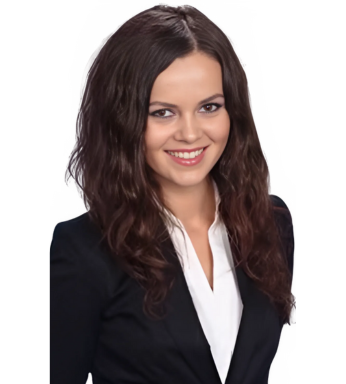
Kateryna Heyman


Let's talk about how we can help your case!
Connect with our team
D.Heyman@HeymanLawGroup.com